By Dana Gentry, Nevada Current
This piece was originally published in the Nevada Current.
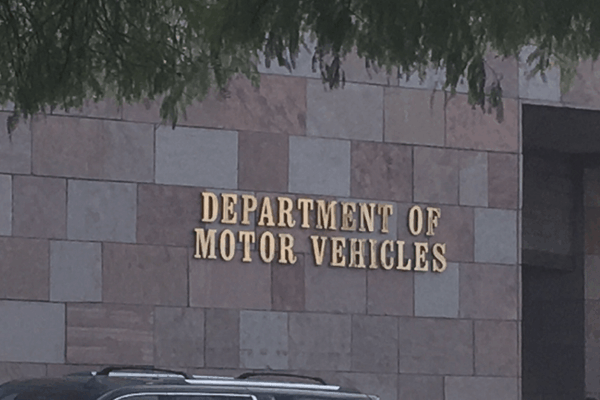
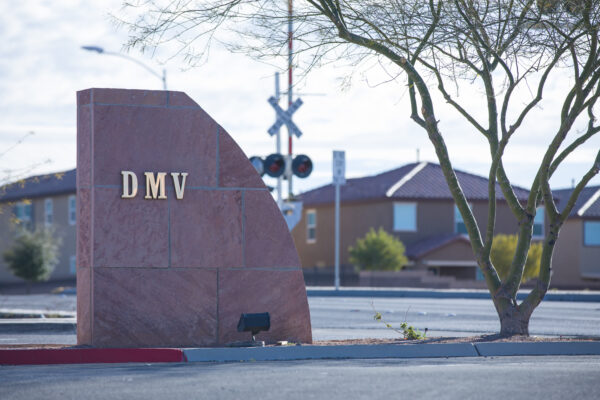
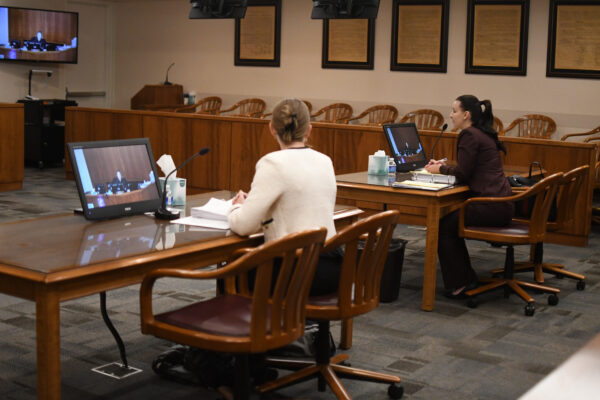
Carson City District Judge Kristin Luis says she’s leaning toward imposing civil penalties against the Nevada Department of Motor Vehicles for failing to comply with the law in its responses to requests from the American Civil Liberties Union of Nevada for the state agency’s communications with Immigration and Customs Enforcement agents, as well as the Department of Homeland Security.
The ACLU filed suit against the DMV in August 2025, alleging that heavily redacted records requested by the ACLU and obtained after significant delays included correspondence between DMV and ICE, with references to chats on Signal, an encrypted communication app known to be used by federal officials, most notably Defense Secretary Pete Hegseth.
“The DMV does not deny that Signal chats existed with DMV employees,” ACLU attorney Sadmira Ramic told the court during a hearing in Carson City Friday. “They don’t even deny that they may have discussed DMV business on there.” Instead, Ramic noted, the agency claimed it has no control over the chats because they are not on the state’s servers, and that searching employees’ phones would invade their privacy.
Ramic stated the Nevada Supreme Court has upheld that employees’ personal devices are subject to the Public Records Act.
“You have this ICE agent that’s reaching out to the DMV employees on their DMV email address, providing basically services and saying, ‘we can help in this way, please add this new person to the Signal chat,’” Ramic said, adding federal agents are not reaching out “other than the fact that they are a DMV employee and privy to certain information that will be helpful.”
Ramic reminded the court that In response to the ACLU’s initial request for DMV’s communications with federal authorities, the agency responded it had nothing.
“‘We don’t work with immigration, we don’t communicate with immigration,’” Ramic said of the DMV’s response. “And then subsequently, in another paragraph, indicated, ‘well, when we take documents from people, we then send it to Immigration for verification.’”
Deputy Attorney General Abigail Pace, representing the DMV, said the agency’s records custodian initially believed “that all of these records were confidential,” and with the assistance of in-house counsel, determined there were no records to produce. Civil penalties, she noted, are for willful noncompliance and delay.
The ACLU also requested DMV”s policies and procedures for communicating with ICE and Homeland Security. “We never received a response,” Ramic said.
“I just don’t know how we got from the initial request being made in early February (2025) to nothing being produced until July.” Luis said, and gave the DMV five days to satisfy the ACLU’s requests, or provide privilege logs detailing why the information is confidential under the Nevada Public Records Act.
“I’m interested to see what comes out and what’s produced to the court,” the judge said. “I have to say, based upon what I’ve reviewed so far, I’m leaning towards a penalty, but I want to see all the records produced.”
Luis ordered the DMV to provide unredacted names and email addresses of the individuals sending and receiving communications with, or regarding, ICE or Homeland Security officials.
Pace of the AG”s office argued the names and email addresses of peace officers were redacted for their protection.
The argument that revealing the names of peace officers could potentially lead to harm “is a very big stretch here,” Ramic of the ACLU responded. “If that was the case, we would never get the names of peace officers.”
Ramic argued the Nevada Supreme Court has ruled that “mere assertions of possible endangerment does not clearly outweigh the public interest” to know the degree of communication between the DMV and federal authorities.
The judge also ordered the DMV to provide group emails that were referenced in correspondence turned over by the DMV, but not included in the records.
Luis ordered the DMV to turn over isolated emails with either no initiating communication or no response.
“To say, because of an isolated email, that there must be a mystery document that the DMV is not providing, contradicts what they have been able to find and what’s in the record,” Deputy AG Pace argued.
“It doesn’t feel like it’s a mystery document,” the judge responded. “It feels like it’s a mystery practice. It may be a practice for federal agencies.”
The DMV must also provide a declaration from its custodian of records of the agency’s policies and procedures for interactions with immigration officials.
“Somebody needs to go on record, swearing or affirming that this is what they’ve done – these are the steps they’ve taken, and that nothing was found, so that in the event down the road, if something is found,” the judge said. “’I’m concerned about how we’ve gotten to where we are after the initial statement of ‘we don’t communicate with immigration,’ and then we’ve got documents.”
Luis noted she has “a lot of concern, including how responsive the AG’s office was when the petition was filed. I don’t know what’s happening but it doesn’t seem like this was a top priority.”
Attorney General Aaron Ford did not respond to a request for comment.